
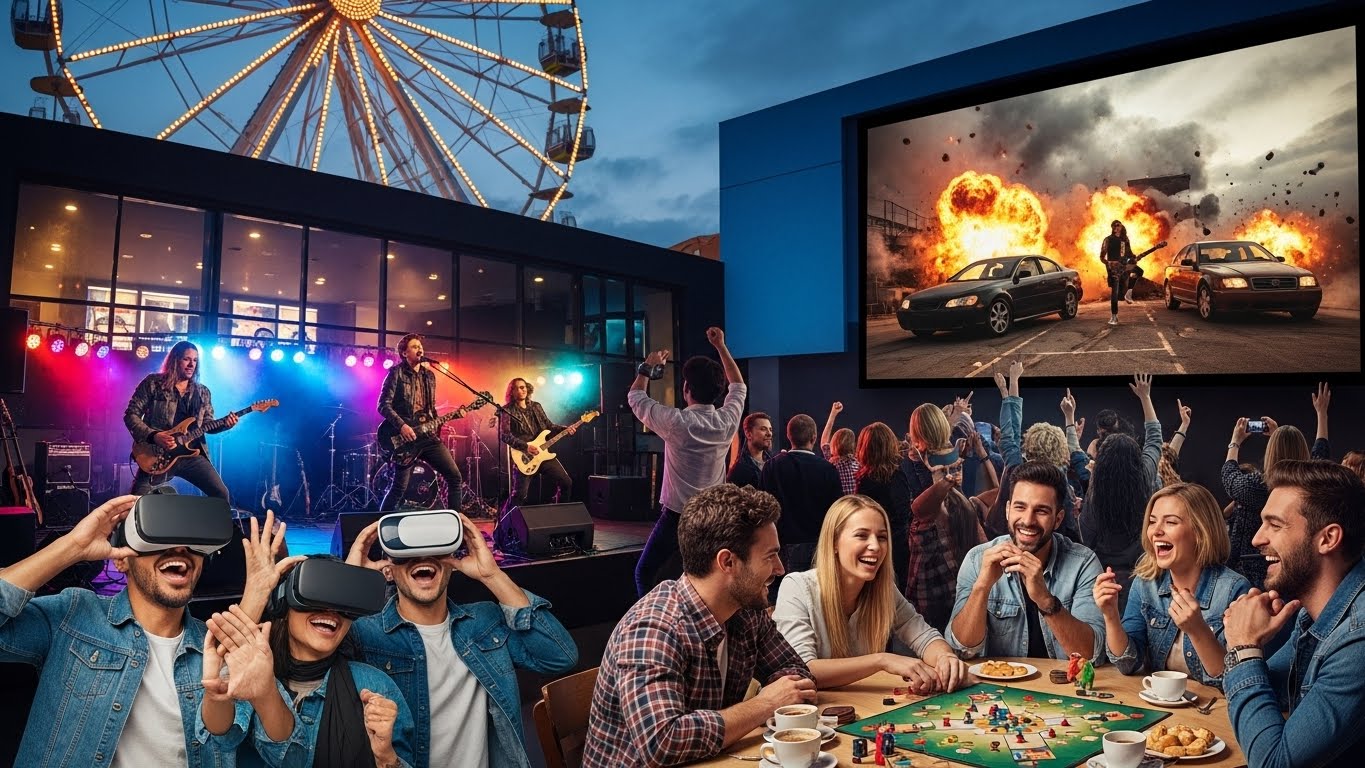
The global entertainment landscape is undergoing a massive transformation driven by rapid technological integration, shifting consumer habits, and a deep-seated desire for communal experience. Audiences no longer passively consume content through a single medium or device. Instead, they actively participate in fluid, highly interactive ecosystems where boundaries between gaming, cinema, social media, and live performance have blurred entirely. From AI-driven creative workflows to the return of centralized media bundles, the current era of entertainment prioritizes quality engagement, digital community, and streamlined access. Understanding these shifting dynamics offers a clear window into how cultural currency is generated and sustained across the globe.
The Rise of Frictionless Aggregation and Unified Streaming
For years, the streaming model fractured under the weight of excessive platform fragmentation. Consumers found themselves navigating a confusing maze of multiple subscriptions, escalating monthly costs, and fragmented broadcasting rights, particularly in live sports. This fatigue has sparked a powerful counter-trend toward unified aggregation, frequently referred to as frictionless entertainment.
Next-Generation Bundling
Media corporations and digital distributors are systematically redesigning user access around utility and transparency. Instead of forcing users to switch between disparate apps, modern ecosystems are embedding direct-to-consumer streaming services into centralized cable, telecom, and hardware interfaces. This evolution creates a single, coherent entry point where legacy linear television, live sports apps, and premium on-demand catalogs coexist seamlessly. Audiences are actively signaling that they do not necessarily want a higher quantity of content, but rather a better, highly customized mix that is easier to discover.
The Rise of Free Ad-Supported Streaming Television
As subscription price increases test consumer limits, Free Ad-Supported Streaming Television platforms have emerged as a dominant global force. These networks replicate the comforting, lean-back experience of traditional television by offering programmed, themed channels alongside large video-on-demand libraries. By eliminating subscription fees in exchange for targeted, non-intrusive advertisements, these services capture immense viewer minutes from demographics looking to reduce financial friction without sacrificing variety.
Gaming as the Ultimate Social Sandbox
Video games have officially evolved far beyond isolated recreational activities, cementing their position as the premier social infrastructure for younger generations. Digital spaces are now functioning as virtual community centers where global audiences interact, build relationships, and form cultural identities.
Virtual Hanging Out and Interactive Spaces
For Gen Z and Gen Alpha, online multiplayer game worlds and coordinated community servers are the preferred venues for daily socialization. A significant portion of young adults report interacting with their friend groups more frequently within interactive digital environments than in physical spaces. The barrier between communication platforms and gameplay has dissolved, allowing individuals to watch media, listen to music, share content, and converse entirely inside an active gaming session.
The Expansion of Cloud Gaming
The continuous global expansion of high-speed mobile networks and advanced cloud computing has democratized access to high-end gaming. Historically, experiencing visually demanding, complex video games required expensive consoles or specialized computer hardware. Cloud gaming eliminates these hardware barriers by handling intense processing requirements on remote servers and streaming the active game directly to standard mobile smartphones. This technological shift has unlocked vast, previously unreachable consumer segments in emerging economies, transforming global gaming into a universally accessible medium.
The Resurgence of Immersive and Experiential Live Events
Despite the convenience of digital access, the human desire for shared, tangible physical experiences has triggered a spectacular revival in live entertainment. However, modern audiences expect these events to offer high levels of visual spectacle, unique curation, and shareable aesthetic appeal.
Visual Spectacle and Viral Concert Formats
Live performances are increasingly designed with physical aesthetics intended to inspire immediate digital sharing. For example, intimate orchestral showcases performed entirely by candlelight have achieved immense popularity across major international cities. By taking iconic cinematic scores or contemporary pop music catalogs and presenting them in visually striking, ambient settings, organizers attract younger crowds who value both acoustic quality and visual curation.
Interactive and Gamified Physical Venues
The entertainment industry is heavily investing in massive, technologically advanced destination venues that redefine scale and immersion. High-tech spheres and specialized arenas utilize wrapping internal LED screens, spatial audio arrays, and haptic seating to envelop the audience in hyper-realistic environments. These installations turn concerts and cinematic showcases into multi-sensory experiences, blending the boundaries between the physical world and digital design.
Generative Artificial Intelligence as Core Infrastructure
Generative artificial intelligence has rapidly transitioned from an experimental novelty into core operational infrastructure within the media and entertainment sectors. Rather than acting as a simple gimmick, these tools are embedded deep within production pipelines to maximize efficiency and personalization.
Streamlining Production and Localization
The economics of content creation are shifting as artificial intelligence optimizes tedious production tasks. Creative teams now utilize advanced machine learning algorithms to automate complex video editing workflows, generate rapid conceptual storyboards, and translate massive content catalogs into dozens of localized languages within days rather than weeks. This hyper-efficient localization allows media companies to release global blockbusters and streaming series simultaneously across multiple continents, maximizing initial audience impact.
Hyper-Personalized Content Recommendations
Modern streaming algorithms rely on granular first-party data to detect shifts in audience mood and interest in real time. Rather than relying on rigid genres like comedy or drama, AI-driven recommendation engines analyze micro-segments of user behavior to curate personalized playlists, adjust displayed promotional imagery, and suggest content tailored to a viewer’s specific aesthetic preferences. This hyper-personalization keeps users engaged for longer periods by significantly reducing the time spent searching for something to watch.
The Power of Nostalgia and the Cinematic Biopic
While technological innovation drives how content is delivered, familiar storytelling remains a primary tool for capturing global attention. In a fragmented media landscape, established intellectual properties and nostalgic cultural touchstones serve as low-risk, high-return investments for major studios.
The Global Phenomenon of the Musical Biopic
Cinematic retells of legendary musical icons are breaking international box office records and dominating music streaming charts simultaneously. High-budget biographical films celebrating the lives, struggles, and artistic triumphs of historical musical figures are capturing the imaginations of older generations seeking nostalgia and younger generations discovering these legacies via algorithmic platforms. When a major biopic hits theaters, it frequently triggers an immediate cascade of streaming peaks, pushing decades-old music back to the top of global charts and demonstrating the cyclical nature of pop culture relevance.
The Convergence of Creator Culture and Hollywood
Traditional Hollywood entities are increasingly treating short-form internet creators as legitimate business partners to extend the life of major media franchises. Short-form videos have become the primary cultural currency for testing new narrative concepts, gauging audience reactions, and building grassroots fandoms. By integrating independent creators directly into promotional pipelines and franchise developments, studios successfully bridge the gap between algorithmic digital video and prestigious, big-budget theatrical releases.
Frequently Asked Questions
How is cloud gaming changing the business model for traditional video game developers?
Cloud gaming is forcing developers to pivot from selling individual, high-priced physical or digital copies toward subscription-based, platform-agnostic models. Because games are streamed from remote servers directly to basic screens, developers must optimize their software for variable internet speeds rather than specific console components. This shift expands the potential player base by hundreds of millions of users, driving creators to focus on long-term monetization strategies like in-game content updates, seasonal passes, and cross-platform cosmetic enhancements.
Why are free ad-supported streaming television channels growing in popularity compared to traditional cable?
These platforms offer the exact same comfort of linear programming without the expensive monthly contracts, specialized hardware installation, or hidden fees associated with traditional cable television. Users can access structured, thematic broadcasts over any internet connection instantly. Furthermore, the commercial breaks on these digital platforms are typically much shorter and highly targeted to the viewer’s specific interests, making the overall advertising experience far less disruptive than legacy television broadcasts.
What guardrails are entertainment companies implementing to manage artificial intelligence ethically?
To protect intellectual property and brand reputation, media organizations are building closed AI ecosystems grounded exclusively in fully licensed data. These boundaries ensure that machine learning tools do not inadvertently utilize copyrighted materials without permission. Additionally, companies are establishing rigorous human-in-the-loop governance structures, meaning editorial teams inspect all AI-assisted outputs for accuracy, bias, and artistic consistency before public distribution, maintaining creative control over the final product.
How do modern live venues use haptic technology to enhance audience engagement?
Haptic technology utilizes precise, synchronized mechanical vibrations embedded directly within a venue’s seating infrastructure or floorboards. When a specific sound frequency occurs during a live concert or a dramatic cinematic sequence, the seats vibrate to match the intensity and direction of the action. This tactile feedback pairs with spatial audio and massive visual displays to make the audience feel physically present inside the event, creating a level of sensory immersion that cannot be replicated by a home theater system.
Why do decades-old songs suddenly re-enter the global charts after a biopic release?
A major biographical film exposes historical music to massive new demographics through a highly emotional, narrative framework. When young audiences witness the story behind a song on a theater screen, they immediately seek out the track on music platforms and share it on short-form social networks. This active algorithmic amplification creates a compounding viral loop, allowing catalog music to compete directly with contemporary pop hits on international streaming charts.
How do streaming networks use first-party data without invading user privacy?
Streaming platforms focus on behavioral data patterns rather than individual personal identities. The algorithms track broad metrics such as playback pause points, completion rates, viewing times, and click-through choices on promotional tiles. This data is aggregated and processed anonymously to train recommendation models, ensuring the user experiences a highly tailored, intuitive interface while their sensitive personal identity and financial information remain securely protected within encrypted databases.